
Sanford City Directory Runs
Sanford's strongest directory trail is historical. Hill's volumes bring names, street locations, telephone information, and household clues together for selected years, while the local library and DigitalNC provide complementary ways to reach the material. The online collection should be checked live because a scan or its OCR can change. A missing year is a gap in the surviving run, not proof that a person left Sanford.
| Collection | Years | Where held | Access route |
|---|---|---|---|
| Hill's Sanford directories | 1950, 1952, 1954, 1957, 1959, 1960, 1962 to 1964, and 1966 to 1978 | Lee County Libraries and DigitalNC | Selected scans online; library local-history help |
| Heins Telephone Company directory | 1949 | Lee County Public Library in the Hawkins bibliography | Ask the library, as no stable scan or index was located |
| Sanborn fire-insurance maps | 1908, 1915, 1925, 1930, and 1938 references | Library of Congress, State Archives, and HPO files | Map and archive research |
| Lee County and Sanford yearbooks | 1923 to 1974 | DigitalNC | Selected online scans, including an announced 1962 Sanford High volume |
The 1954, 1964, and 1966 through 1978 releases were specifically announced by the library partnership. Other DigitalNC and HPO references identify the additional Hill's years in the table. For older or missing material, county record series and copy requests belong with the North Carolina State Archives, not with an assumed all-years digital index.
Lee Library and DigitalNC Access
The Lee County Library local-history service is the practical fallback when an online directory has a gap, a scan is hard to read, or a surname needs help with local spelling. The current state library directory lists the Main Library at 1740 Bragg Street in Sanford and gives 919-718-4665. DigitalNC metadata may show an older Hawkins Avenue address, which is collection metadata rather than the current branch location.
The library contributed directory volumes, scrapbooks, and a yearbook to DigitalNC. Start online with the Sanford collection announcement, then preserve the volume title, printed year, page, and the date the scan was checked. The Railroad House Historical Association is another local holdings and contact route when a railroad, building, or image lead needs local context.
The Lee County Library local-history source documents the service behind the historical collection.
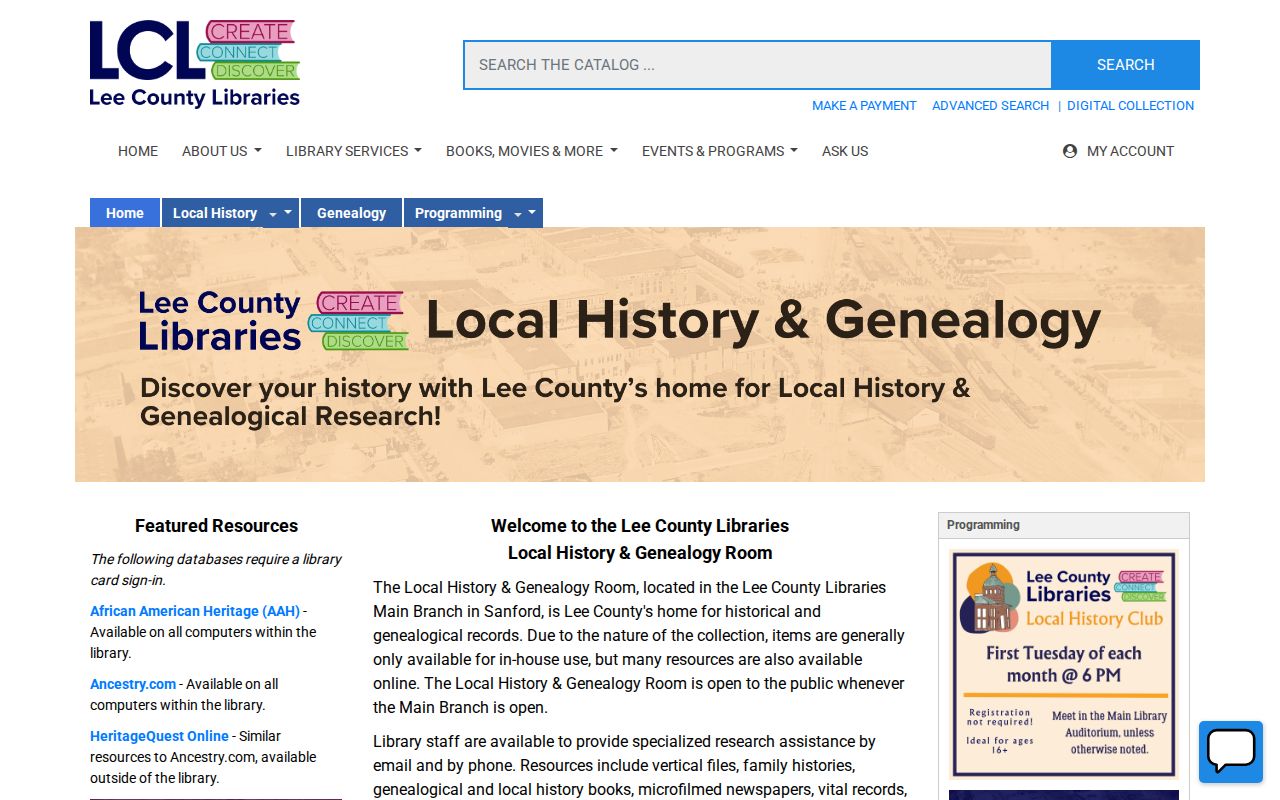
Library help is most useful for locating a volume, confirming a catalog path, or choosing a newspaper and map companion. It cannot turn a directory line into proof of a present household.
Note: Save the source URL, printed year, page reference, and any uncertain abbreviation before comparing a Sanford entry with another record.
Decoding a Sanford City Directory
The preface to the digitized 1962 Hill's volume describes a rich, but limited, entry format. Its alphabetical portion includes residents, businesses, and institutions. It can provide an occupation, a wife's name, and a widow notation tied to a deceased husband's initial. The householder portion then rearranges the information by street and numerical location. Read an item as a printed-year observation, not as a complete biography.
| Name line | Resident, business, or institution as printed in the alphabetical section. |
|---|---|
| Household clue | Wife's name or widow notation where the volume printed one. |
| Work clue | Occupation shown in the alphabetical entry. |
| Street clue | Street or avenue and numerical location in the householder guide. |
| Occupancy clue | Homeowner or renter notation and telephone where printed. |
Use the 1962 Hill's preface to check these conventions against the source. The classified pages also arrange businesses, professions, clubs, societies, hospitals, cemeteries, libraries, and parks, so a name may appear in more than one part of a volume.
- Criss-cross directory
- The street-ordered, historical reverse function: begin with a number and street, then read the household or business printed there.
- Householder index
- The part of a volume that identifies a household or business by its numerical street location.
- Abbreviation key
- The printed key that explains local shorthand. Preserve it rather than silently expanding an uncertain mark.
- Owner mark
- A printed indicator, such as the 1950 “O” clue, that may suggest owner occupancy but does not replace a recorded deed.
Sanford Street Guides Both Ways
Hill's street guides are the usable historical reverse search for Sanford. Search a surname in the alphabetical pages, copy the address exactly, then find that number in the street guide. The opposite route also works: begin with an old street number and read the householder or business associated with it. No separately titled modern reverse-directory collection was located for Lee County.
This two-way check matters when the name has a variant spelling or the same family appears at more than one address. It also keeps the result tied to the printed year. When the next question is about a current parcel, use the Sanford street directory lookup for the modern GIS, tax, and deed route instead of projecting an old listing forward.
Sanford Yearbooks Beside Directories
DigitalNC yearbooks add a different kind of dated evidence. Lee County High, Sanford Central, and Sanford High material spans 1923 to 1974, and the 1962 Sanford High book was specifically part of the library release. A yearbook can connect a name to a class, activity, or school-era photograph. It is a useful lead for reconnecting with a former classmate or documenting family history, but it is not evidence of a current address.
Pair a yearbook date with the nearest Sanford directory year, then test the street against the householder guide. If the person is absent, record the absence and try the next available printed year rather than treating one volume as a full census.
Tracing Sanford Households Through Directories
A household trail works best as a sequence of dated comparisons. Start with a known printed entry, not a guessed present address. Each subsequent source should answer one narrow question: whether the name still appears, whether the street changed, whether the directory used a different local label, or whether a property source shows a separate legal owner.
- Locate the first available Sanford directory entry and transcribe the name, address, and every printed abbreviation.
- Read the same address in the street guide, then note household or business names in the numerical sequence.
- Compare the next available directory year and keep the publication years separate from a move date.
- Use a Sanborn sheet or HPO file for building and street context, then use tax or deed records for a legal-owner question.
- Check a yearbook, newspaper, marriage index, or archive record only for the event or relationship it can actually support.
A disappearance can reflect a move, death, unlisted status, changed spelling, altered address, or a gap in the surviving run. The Sanford Herald and other local newspaper holdings are partial, and no standalone official Lee obituary index was located. Library staff, DigitalNC searches, and the State Archives copy-request route are the documented alternatives.
Note: A directory and a deed answer different questions, so label one as an occupant clue and the other as a legal transfer record.
Sanford and Jonesboro Directory Labels
Sanford merged with Jonesboro in 1947, and the former Jonesboro area is now known as Jonesboro Heights. Older directory research may therefore use Jonesboro, Sanford, or a neighborhood label for related places. Search each historically plausible label, but cite the label that the printed source used instead of quietly replacing it with a modern form.
| 1947 | Sanford merged with Jonesboro, changing how local geography could be named in later sources. |
|---|---|
| 1950 | The earliest cited Sanford city directory begins the verified Hill's run. |
| 1962 | The Railroad House was moved, a reminder that a structure's historic setting may differ from its current parcel. |
| 1978 | The last year in the verified selected Hill's directory run listed for Sanford. |
City history and historic-property sources can clarify a changing label or boundary. A municipal boundary clue is not a substitute for the year and address printed in the Sanford directory.
East Sanford's Four-Source Method
The East Sanford Property Inventory supplies a disciplined local method. Its abbreviations are CD for city directories, LCSF for Lee County Survey Files, SM for Sanborn Maps, and TR for tax records. The inventory covers a core residential area developed from 1894 to 1960 and demonstrates why different sources should be compared rather than collapsed into one answer.
For example, a building can be absent from one source and appear in another because map coverage, construction, conversion, or indexing changed. The inventory notes 405 South Third, Sanford Chapel, as absent from the 1938 Sanborn and present in the 1950 directory. That comparison is a research lead, not proof of when any household began or ended.
Sanford's 1938 to 1950 Gap
East Sanford documentation cites partial 1915 Sanborn coverage and later 1925, 1930, and 1938 maps, followed by the first cited 1950 directory. That leaves a real 1938 to 1950 gap. Deeds, tax records, newspapers, oral and local-history files, and the relevant HPO material become more important there. A blank search result should never be turned into a claim that a structure was vacant or that no one lived nearby.
The Library of Congress 1915 Sanford map record can provide map context, including a partial East Sanford view. Keep map year, directory publication year, and any later property record date distinct in notes.
Limits of Sanford City Directories
A Sanford city directory was compiled for publication, not as a universal resident roll. It may omit people, carry a lagged address, list a business rather than an occupant, or use a convention that needs the volume's key. The 1949 telephone directory is cited by the Hawkins Avenue bibliography, but no stable scan or index was located. Ask the library about access rather than claiming that a person is absent from it.
For family history, the best result is a carefully dated source trail. For a present-day question, confirm the county and parcel first, because a Sanford mailing line can extend beyond city limits or Lee County. Do not use historical directory information to pursue, harass, or expose a person.