
Start a Sanford Residents Directory Search With One Clue
A Sanford residents directory search is more accurate when it starts with one stable clue: a full name plus a county, a street address, an approximate year, a parcel, or a former surname. Lee County is the normal starting jurisdiction for a Sanford address, but the parcel should decide the custodian. The property roll, voter file, Register of Deeds, Clerk, City inspections desk, library, and state agencies each preserve a different type of evidence.
Use independent records in sequence. A tax card identifies a parcel and assessor owner field; a recorded document establishes a legal transaction; a voter record is a registration clue; and a printed directory captures a dated listing. A missing result can mean the wrong county, an unsearched date range, protected material, or a different custodian. It is not a conclusion about a person.
- Confirm the address or parcel in the Lee tax search and GIS map.
- Check the relevant official name index, such as the North Carolina voter lookup or eCourts docket portal.
- Compare the record date, county, and role before treating two entries as a match.
- For an earlier household, use the library or DigitalNC directory run with map and tax context.
- When a record is not online, ask the office that created it for existing material under Chapter 132.
Where the Sanford Residents Directory Records Begin
Three local custodians handle most Sanford routing questions. The Register of Deeds preserves recorded land instruments and local vital-record copy routes. The Tax Assessor and GIS offices identify parcels, situs addresses, boundaries, and tax data. The Clerk keeps court, estate, special-proceeding, and divorce material. The Board of Elections provides a separate registration route. These records overlap, but each must be read within its own purpose.
Lee County Register of Deeds
1300 S. Horner Blvd
Sanford, NC
919-718-4585 x1
Lee County Tax Assessor
Lee County property records
Sanford, NC
Tax portal access
Lee County Board of Elections
1503 Elm Street, Suite 1
Sanford, NC 27330
919-718-4646
Use the Lee Tax Card as a Sanford Residents Directory Index
The Lee County Tax Assessor portal is the clearest local starting point for an address or an assessor owner field. Its controls include Parcel ID, Owner Number, Owner, Legal 1 through Legal 3, Lot Number, Address Number, Street, Book, Page, and Tax Year. Owner names use LastName, FirstName, and an asterisk is available as a wildcard. Results can be sorted, paged, selected, exported as CSV, or opened as a RES PRC property card.
| Field group | Useful Sanford clue | Careful next step |
|---|---|---|
| Address number and street | Situs parcel | Confirm its map geometry |
| Owner or owner number | Assessor owner field | Check a recorded instrument |
| Legal description, lot, book/page | Stable land reference | Carry it to deed or plat research |
| Tax year and card | Date of the tax snapshot | Save result date and access route |
The Lee tax search screen shows the field layout and export controls used for this kind of routing.
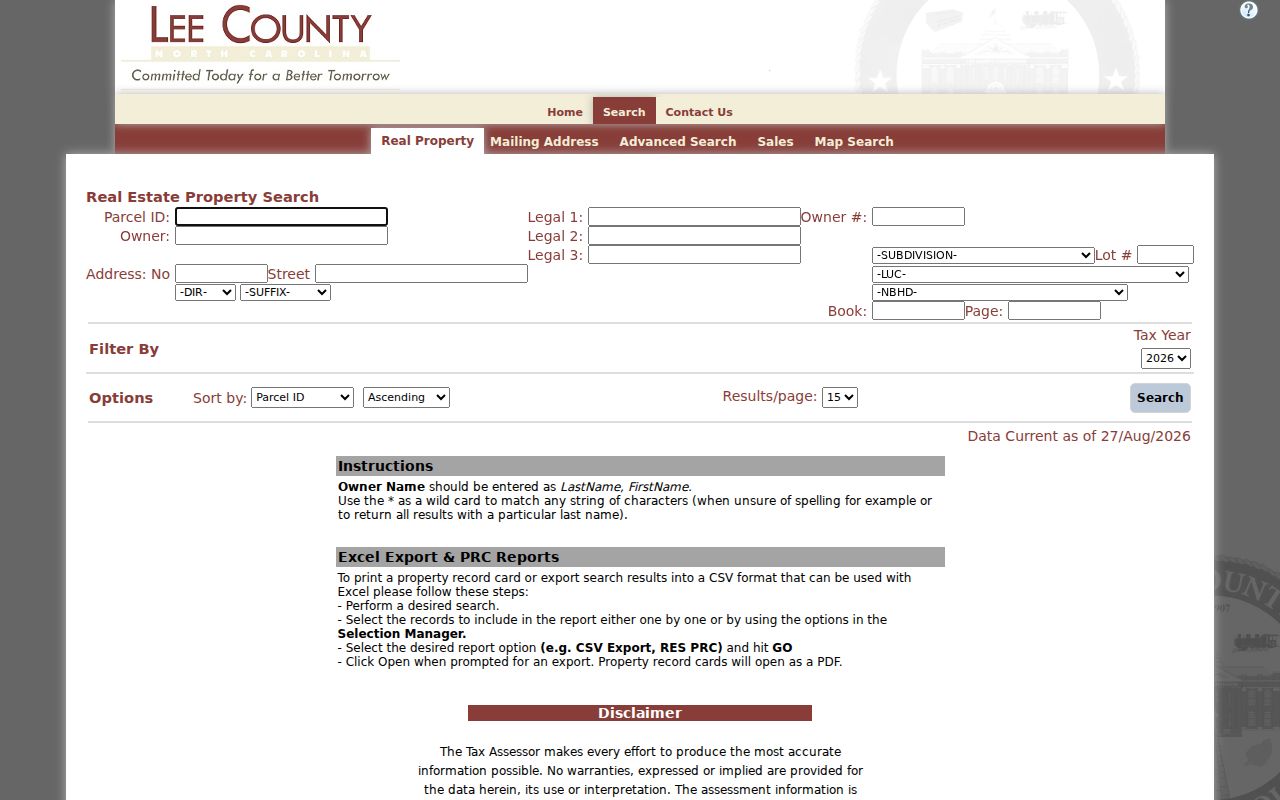
The portal warns that assessment data is periodically updated and may not reflect the latest ownership or physical characteristics. Treat the card as an index and tax snapshot, then verify a material ownership question with the Register of Deeds.
Route a Sanford Residents Directory Search by County, Not ZIP
Sanford postal labels are not a complete jurisdiction test. The official ZIP table places 27330 across Chatham, Harnett, Lee, and Moore counties; 27332 crosses Harnett and Lee; 27331 is a Sanford entry in Lee County. A record request sent only by postal city can therefore miss the correct tax, deed, or court custodian. Start with the parcel situs and county, then check city limits or ETJ in GIS when a municipal record is part of the trail.
This is a local geography issue as well as a records issue. County GIS emphasizes parcels, owners, floodplain, zoning, utilities, and districts. City GIS emphasizes corporate limits, ETJ, wards, precincts, fire districts, historic districts, and services. A Sanford address can have a postal connection, a Lee parcel, and municipal context that need to be checked independently. For a full ZIP-by-ZIP route, use the ZIP directory rather than forcing every address into one county.
Sanford Residents Directory Voter-Record Checks
The North Carolina Voter Search asks for first and last name, with optional middle initial, year of birth, county, and status. A public record can show the registration context the law permits, including name, county voter ID, residence or mailing address, age, party, precinct and district assignments, and voter history. It does not provide Social Security numbers, dates of birth, email, driver-license information, photo-ID material, or protected addresses.
For a Sanford residents directory search, narrow by Lee County and compare the returned status, address context, and precinct with an independent record. State files update on a weekly cycle, and historical snapshots are not a continuous residency record. County or precinct lists are a separate written-request route under G.S. 163-82.10, with allowed fields and preparation costs controlled by law.
The voter-search interface captures the field choices used to make that narrow comparison.
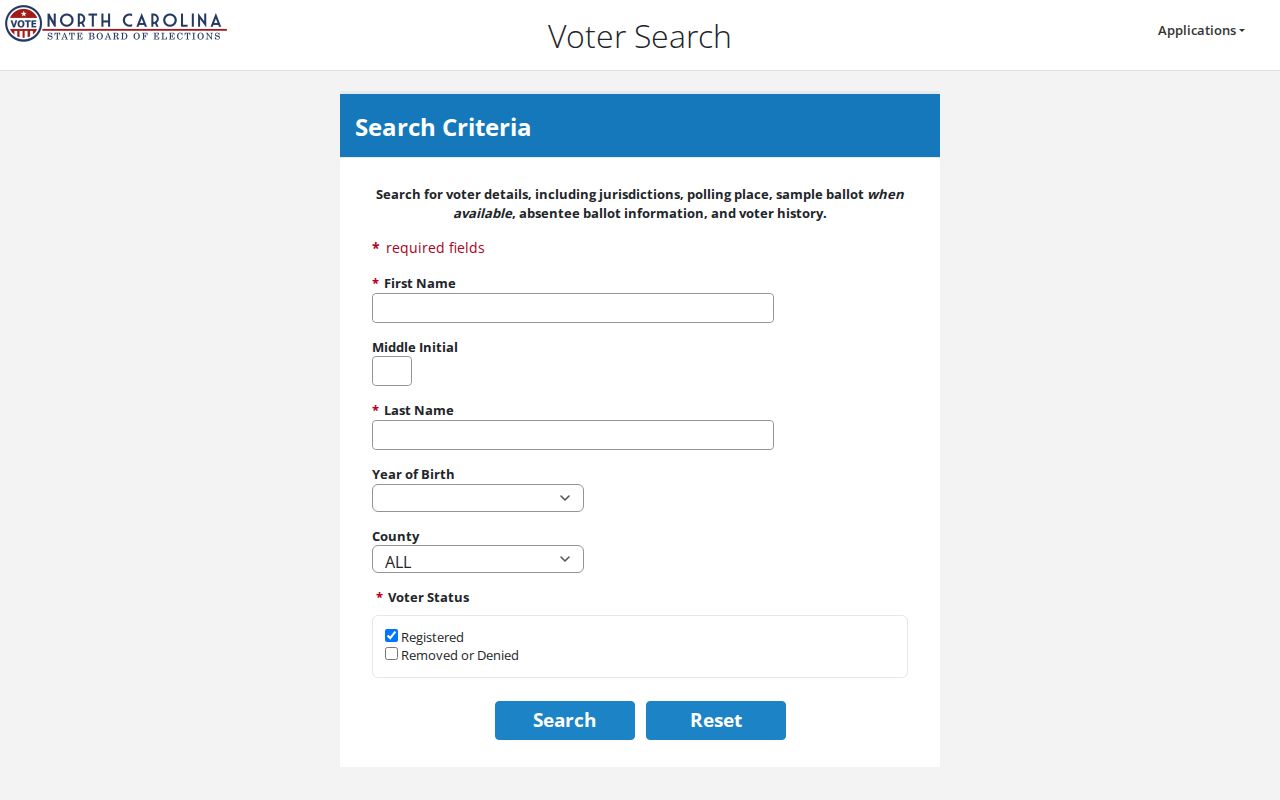
Keep the search date and do not publish or try to reconstruct data that the public record excludes.
Sanford Residents Directory Court Docket Checks
North Carolina completed eCourts implementation in all 100 counties on October 13, 2025. The public Portal offers case number, party name, business name, attorney or bar number, judicial officer, courtroom, hearing location, and hearing-type routes. A docket can confirm a public case caption, number, event, or hearing, but it is not a certified file and a party name is not an identity match by itself.
Use the North Carolina eCourts information page to reach the Portal, retain the Lee County and case number, and ask the Lee Clerk for a public terminal search, paper file, copy, or certification when needed. The courthouse is at 1400 S. Horner Boulevard, Sanford, and its public counter is a fallback when an online docket lacks a document or a certified record is required.
The eCourts entry screen illustrates the statewide portal route that replaced county-by-county assumptions.
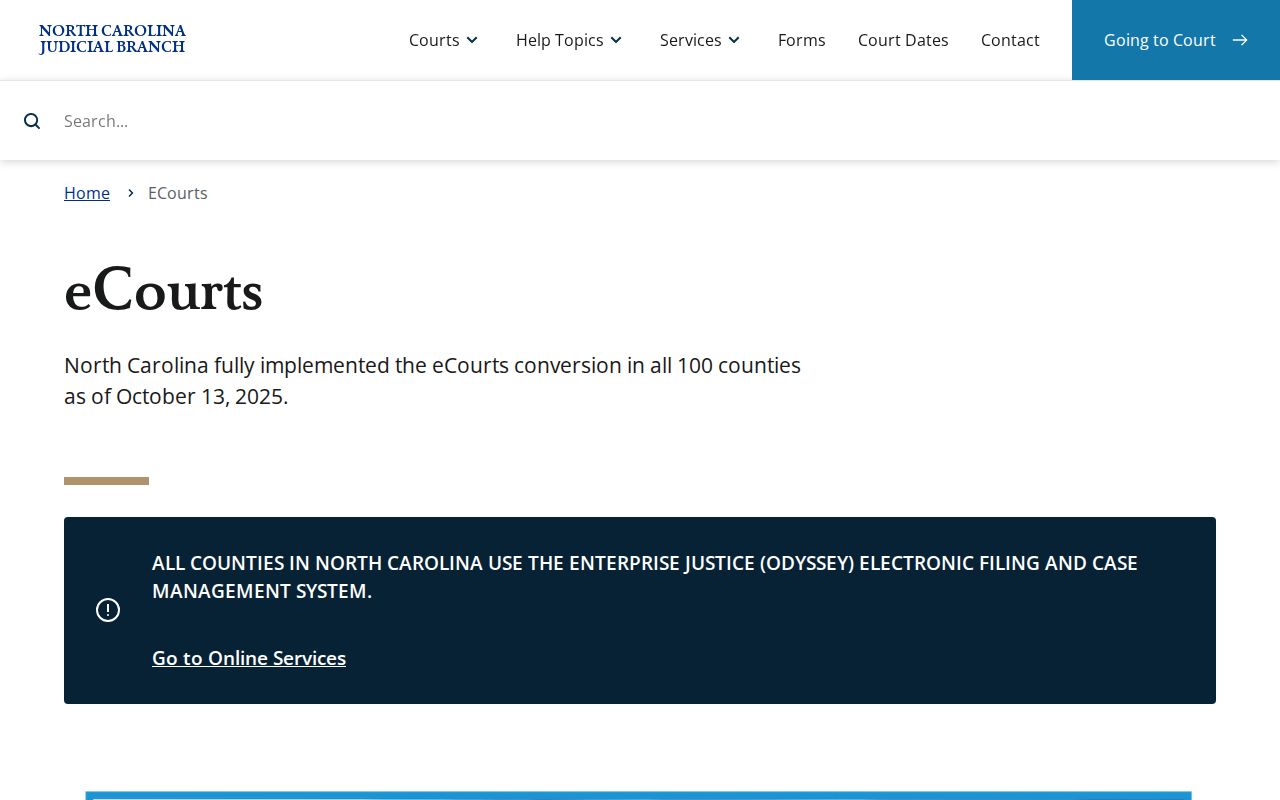
Sealed, expunged, or protected matters may not appear, so a no-result screen does not establish that no court record exists.
Sanford Vital Records Have Local and State Custodians
Vital-record routing depends on the event and requested copy. The Lee County Register of Deeds is the practical local counter for birth, death, and marriage copies, while NC Vital Records holds statewide certificates and indices. Divorce records are court material held by the Clerk in the county where the divorce was granted. Research found no simple current year-based openness rule for birth records. Access turns on record type, relationship, certification purpose, and statutory protections.
North Carolina records list local birth holdings from 1913, death from 1930, marriage from 1962, and divorce from 1958, subject to the office’s eligibility procedures. G.S. 130A-93 protects birth access and parent addresses or Social Security information. The state order process asks for record type, place, date, relationship, identifying information, and payment details. Use it to request an authorized certificate, not to infer a person’s current location.
The NC Vital Records ordering screen shows the record and relationship choices that govern a request.
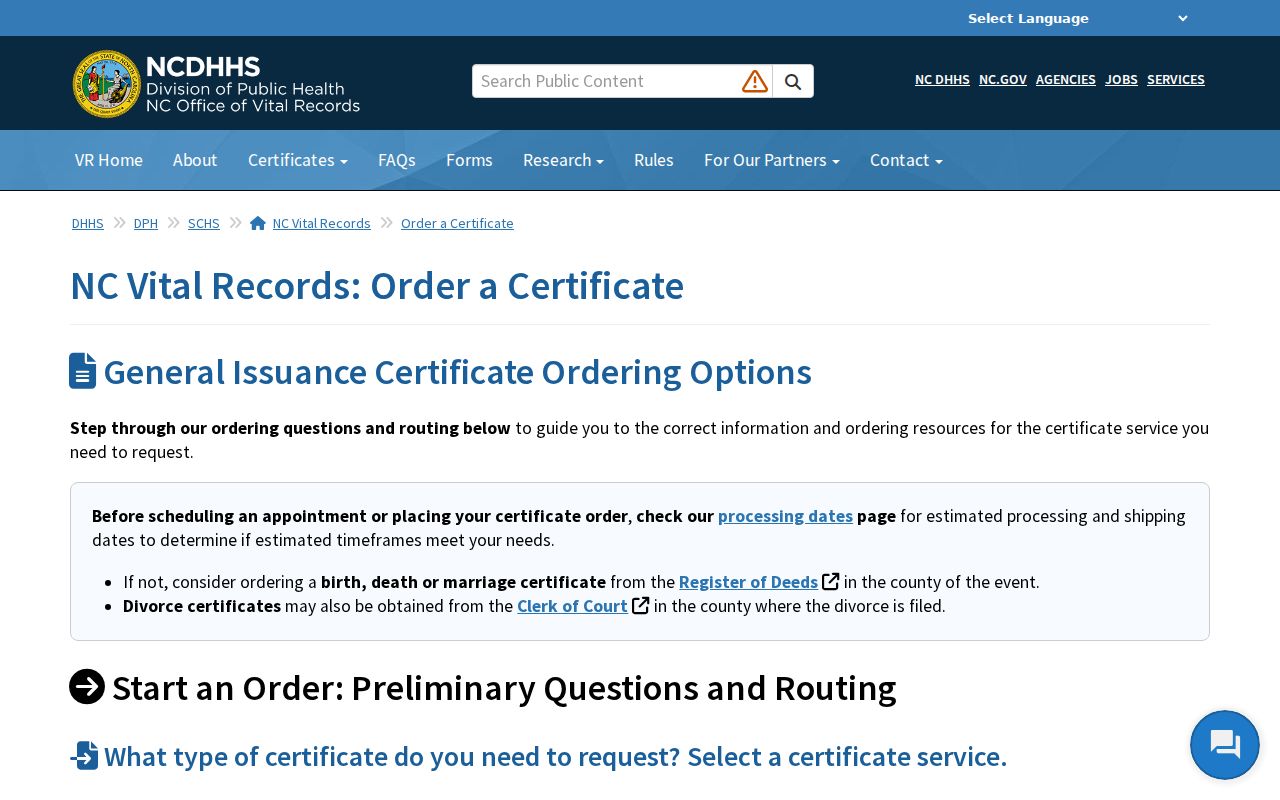
A restricted certificate is a legal access boundary, not a reason to look for the same private detail through unrelated records.
Current Sanford Residents Directory Sources
There is no single current Sanford resident roll. The sources below are useful because they reveal a limited, dated fact and tell a searcher where to go next. A record may show an owner, registrant, party to an instrument, or permit event. It should not be stretched into a claim about every person at an address.
| Source | Who It Lists | Keeper | Access |
|---|---|---|---|
| Tax parcel card | Assessor owner field and parcel context | Lee Tax Assessor | Web search, card, export |
| Voter registration record | Public registration fields and districts | NC State Board of Elections | Lookup, file, county request |
| Recorded index | Grantor, grantee, and recorded instrument trail | Lee Register of Deeds | Portal, counter, older archive route |
| City permit record | Address-linked construction or inspection event | Sanford Inspections | CSS search or agency request |
| Historic directory | Published household or business listing for its year | Lee County Library / DigitalNC | Library and digitized collection |
When the question narrows to one person, use the Sanford resident lookup guide to compare name-based sources without treating a name match as proof. When the clue is a house number or block, the address workflow belongs on the street-directory page.
Sanford Permit, Archive, and Street Context Records
Municipal records can add structure history without becoming a citywide people index. Sanford Inspections identifies building permits, certificates of occupancy or completion, inspection records, correction items, and permit status. Its public guidance says to search an address without the street suffix, then open the matching result. When a needed item is not shown online, request the existing record from the department that created it, with the address, date range, type, and desired medium.
The City Archive Center provides Keywords, Archive, Time Period, Start Date, End Date, and Search controls. It can surface permit reports, historic-preservation material, budgets, board packets, and guides that identify a project or parcel. Search a street, district, or project first. A hit is a lead to a record series, not proof about an individual.
Sanford Residents Directory Safety and Request Limits
North Carolina’s Public Records Act, Chapter 132, opens existing public records while allowing other laws to protect specific fields. G.S. 132-6.2 permits a requester to choose an available medium and limits ordinary uncertified-copy cost to actual reproduction cost. An agency may charge reasonable actual IT or labor cost for extensive database work, and it need not create a record or new compilation. A focused request for existing fields is more likely to reach the right custodian than a broad demand for everything about a place.
Personal use and safety. Public records may support lawful family-history, estate, consumer-safety, or civic research. Do not use them to stalk, harass, intimidate, or harm anyone, and do not try to reconstruct a protected address.
The NC Address Confidentiality Program can provide a substitute address for qualified participants. The missing location is a safety protection, not a puzzle to solve. Preserve record dates, redact protected details, and verify an important result with the office that holds the record.
Unexpected Official Name Sources in the Sanford Record Trail
Some state sources can help distinguish a name or event, but they are not general resident lists. The Lee County Detention Center has a separate current or released search, charges search, and day search; it is not a complete criminal-history system. The state Adult Correction locator covers state prison, probation, and parole information and does not include county jail information. The Sex Offender Registry is limited to registered people and warns that names and descriptors are not necessarily unique.
The North Carolina Adult Correction search screen is a useful reminder that state and county custody records are different systems.

Use those tools only for their stated public-safety purpose and compare a result with the official custodian rather than relying on a same-name hit.
The North Carolina Sex Offender Registry uses name, city or ZIP, and nearby or address routes for its published records.
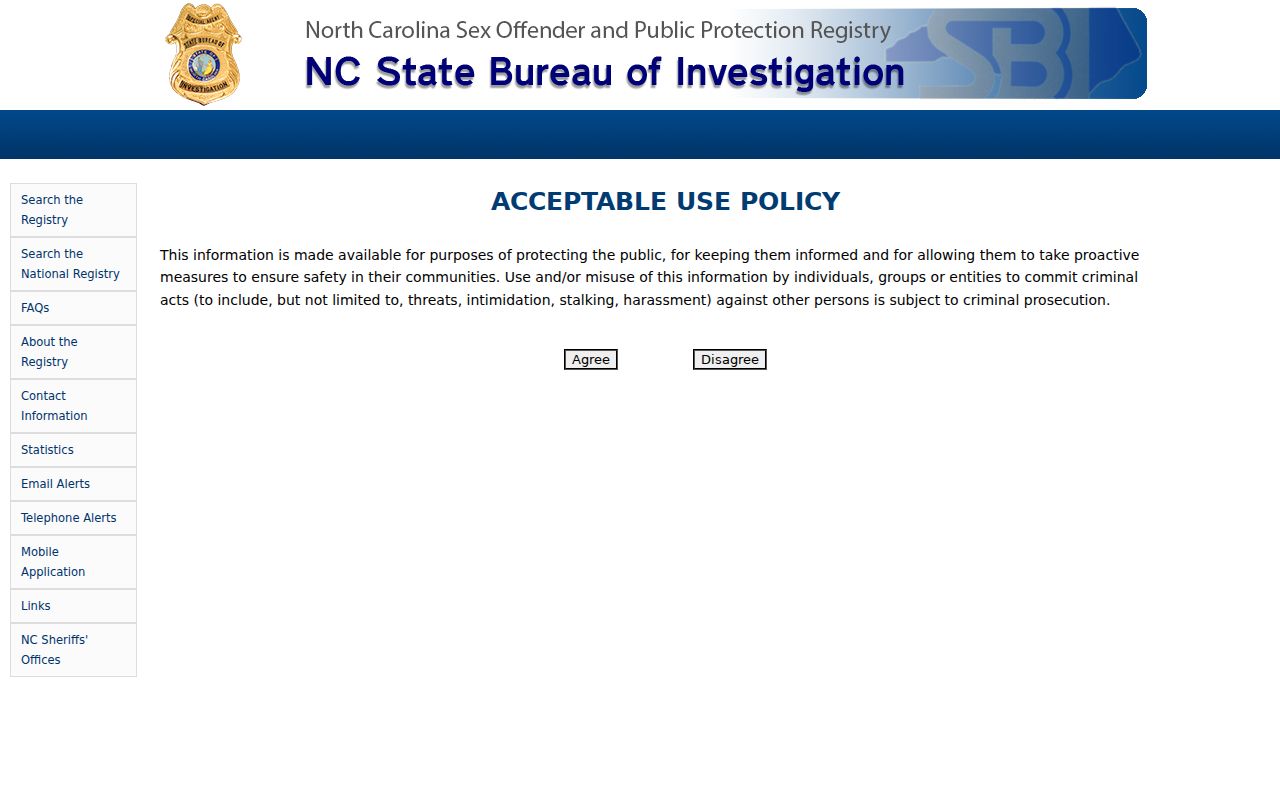
A registry result has a narrow statutory scope and cannot certify identity, residence, or conduct beyond the information the registry itself publishes.
Use North Carolina Cash as a Name Lead, Not a Residence Claim
North Carolina’s NCCASH database is a free state search for unclaimed property by name or business. It is updated daily and supplies a claim-status path, but a matching name or address is not evidence that someone lives in Sanford. Claimants must satisfy the Treasurer’s identity process. Use a match only as a prompt to compare a name with independently sourced local records.
The NCCASH search page shows the claim-oriented workflow rather than a resident directory.
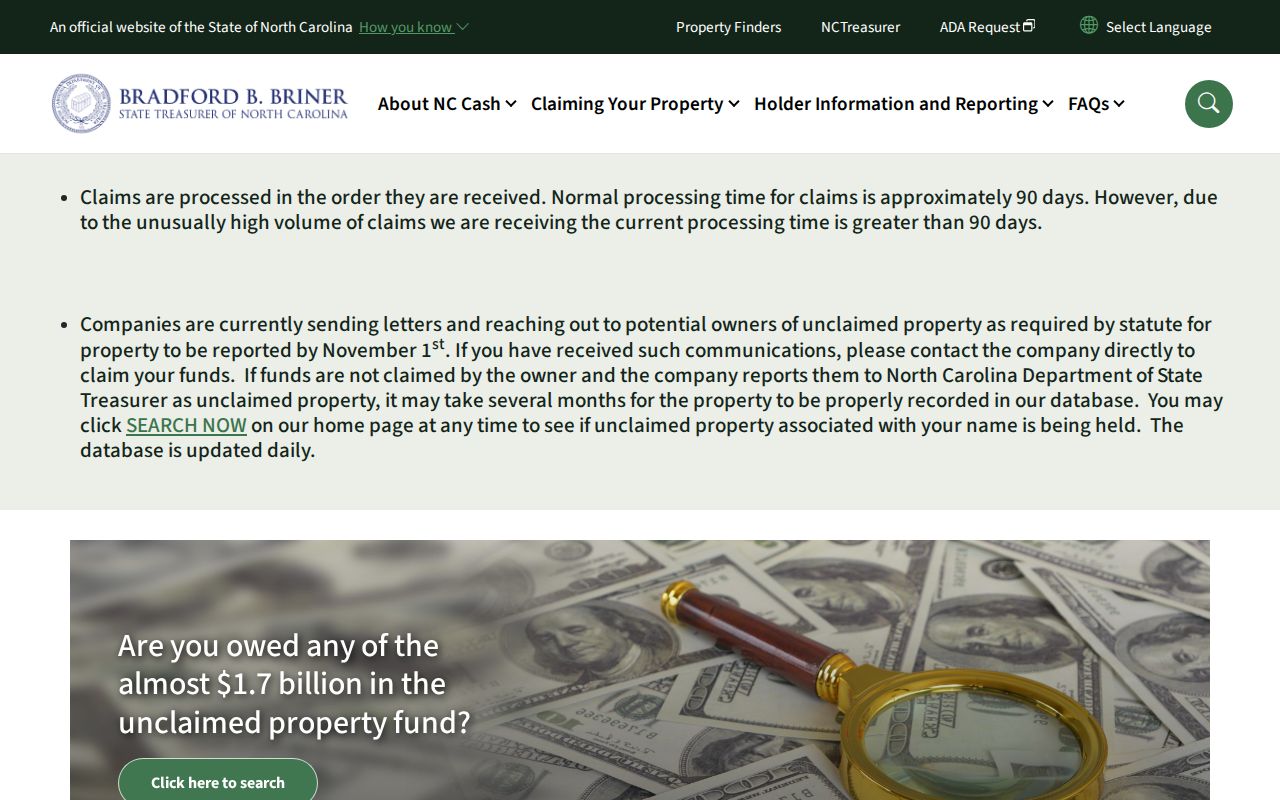
That distinction keeps a search anchored to the purpose of the state database and avoids turning a financial claim lead into a present-address assertion.
Terms That Make a Sanford Residents Directory More Accurate
Roll means a list created for a defined public function, such as assessment or voter registration. Index means a finding tool that points to a source, not always the source image itself. Parcel is the mapped land unit used in tax and GIS work. Criss-cross directory is a reverse street guide that starts with an address and reports the listing printed for that directory year.
These labels make it easier to compare entries without mixing their dates or purposes. A current assessment-year card is a tax snapshot. A recorded deed describes a legal instrument on its recording date. A directory is a publication-year household clue. A map shows what the cartographer depicted. Naming the role and date beside each Sanford residents directory result is a simple way to keep a useful local trail from becoming an unsupported personal claim.
Historical Sanford Residents Directory Shelves
Sanford’s historical trail is unusually useful because selected Hill’s directory years and related local material are available through Lee County Library and DigitalNC. The directory collection gives dated name, address, occupation, telephone, and household clues, while the street guide can be read in reverse. It is a historical snapshot, not a current roll. The complete collection method is detailed in the Sanford city directory guide.
Pair a directory year with a Sanborn map, tax or deed record, a newspaper, or a local HPO survey. The local record set notes real coverage gaps, including the span between the 1938 map and a 1950 directory reference. A gap invites another source; it is never proof that an address was empty or a person was absent.