
Sanford Resident Lookup Records
To look up a resident in Sanford, start with the record that matches the question. Lee County’s tax card can connect an assessor owner field with a parcel and its situs, while the Register of Deeds preserves legal instruments. The state voter lookup can corroborate a registration record, and the court system identifies public case activity rather than identity or present residence. Historical directories and state license tools are useful only as dated, narrow evidence. Each route can produce a different kind of association, so labels matter.
| Record | What it can confirm | Custodian | Access route |
|---|---|---|---|
| Tax parcel card | Assessor owner field, situs, mailing relationship, parcel ID | Lee County Tax Assessor | Name, address, or parcel search |
| Recorded instrument | Grantor, grantee, document chronology, legal description | Lee Register of Deeds | Portal or office, with online coverage checked live |
| Voter record | Registration status, address, precinct, district, party, history | North Carolina State Board of Elections | NC Voter Search |
| Public court docket | Case party, number, events, hearings, and status | NC eCourts and Lee Clerk | Portal, terminal, paper file, or certified-copy request |
| Vital or divorce record | A qualifying birth, death, marriage, or divorce event | ROD, NC Vital Records, or Clerk | Relationship and record-specific rules apply |
| License or business record | A state status snapshot or published entity filing | Board, NCBOLD, or Secretary of State | Name, city, number, or entity fields vary by source |
A property owner is not necessarily an occupant, a directory line is a snapshot, and a name in a docket is not proof of a match. Record the custodian, source URL, record date, and search date before combining anything. The tax portal’s information can be periodically updated, and the ROD’s searchable online cutoff was not verified in the official sources, so an absent web result should be routed to the office rather than treated as a negative finding.
Sanford Resident Lookup Name Checks
Use a full name plus one non-sensitive detail before widening a Sanford resident lookup. A middle initial, former surname, approximate year, known street, parcel, school year, business name, or county can help distinguish two public records without exposing protected data. Keep each spelling exactly as a source returns it. A result may identify an assessor owner, a party, a voter, a license holder, or a historical directory entry, and those roles should never be silently merged.
The most useful stopping rule is simple: after two independent, purpose-relevant sources agree on the limited fact, stop collecting. If results conflict, preserve the difference and ask the original custodian for clarification. A same-name court result, an old directory listing, and a current tax field can all be legitimate records for different people. This protects the reader from turning an association into an unsupported claim of current residence.
Note: A Sanford mailing line can cross county boundaries, so confirm the parcel county before using a local court or property record.
Sanford Resident Lookup Voter Checks
The North Carolina voter lookup requires first and last name and offers middle initial, birth year, county, and Registered or Removed or Denied status choices. A matching public record can show registration status, precinct or district context, party, polling information, and voter-history links. It is not a list of every person at an address or a real-time occupancy signal. Compare the county and address context, then note whether the record is active or removed.
The State Board of Elections describes current voter-file updates as occurring weekly on Sunday evening, with historical snapshots available for at least fifteen years as available. Public data rules exclude full or partial Social Security numbers, date of birth, email, driver-license details, and photo-ID information. Signatures may be viewed but not copied or traced. ACP participants and court-protected addresses are exceptions to the normal address display.
The State Board’s voter-registration data information shows the available current and historical file routes.
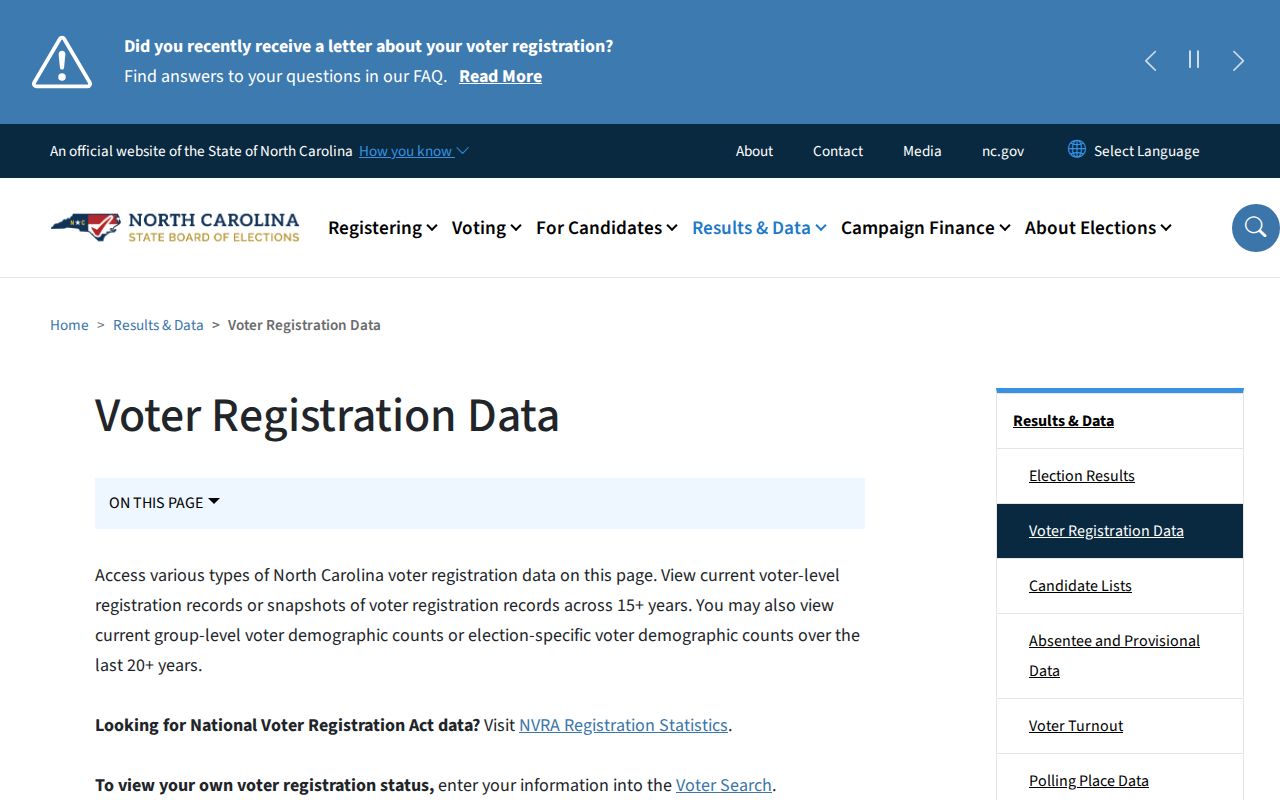
Use a returned address only as dated registration evidence, and do not publish protected fields or infer that a voter is physically present.
Sanford Resident Lookup Court Context
North Carolina completed eCourts implementation in all 100 counties on October 13, 2025. For Lee County, the NC eCourts Portal can search by case number, party name, business name, attorney name or bar number, judicial officer, and courtroom. Hearing filters include location and types such as Civil, Criminal, Family, Probate, and Mental Health. Search with the narrowest known combination, save the case number, then compare the case type and dates before reading docket events.
A Portal result is public docket information, not the official file. Sealed, expunged, and protected records are absent. The case summary or Register of Action may display events, summonses, warrants, orders, hearing details, disposition or status, counsel, and sometimes a document indicator. A charge or case event is procedural information, not a conclusion about a person. The Lee County court contact directory identifies the Clerk route for local files and certification.
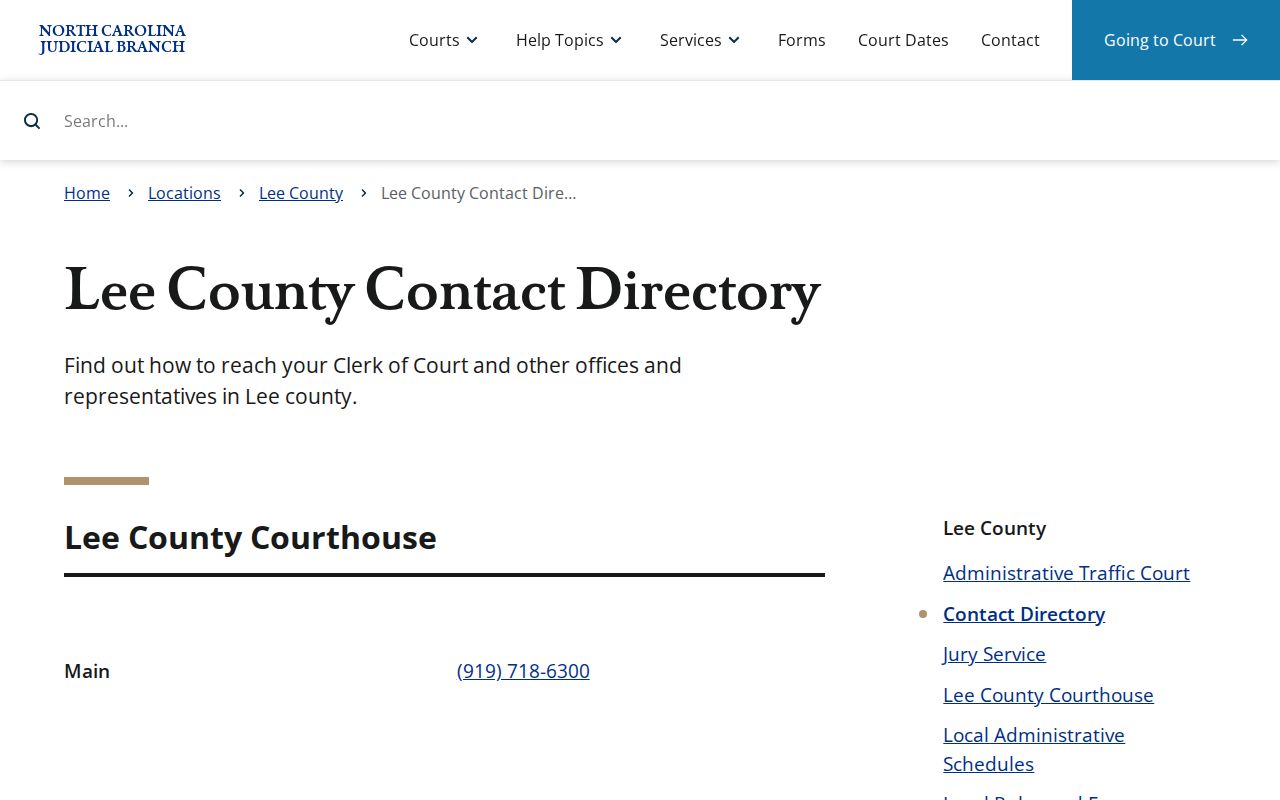
The Lee County Courthouse is at 1400 S. Horner Boulevard, with weekday hours of 8 a.m. to 5 p.m. and Clerk phone 919-718-6300. A public terminal can be searched by defendant name, case number, or victim or witness name; paper files and certified copies use the Clerk’s public-record path and may carry copy charges.
Sanford Vital Records Have Split Routes
Birth, death, and marriage copies have a practical Sanford route through the Lee Register of Deeds, while NC Vital Records holds statewide originals and indices. Divorce is handled through the Clerk of Superior Court where it was filed. State holdings begin in 1913 for births, 1930 for deaths, 1962 for marriages, and 1958 for divorces. Those holdings dates do not create an unrestricted-copy rule. Birth access under G.S. 130A-93 depends on relationship, authorization, or a legal or property-right purpose, and protected parent addresses and Social Security numbers remain protected.
The state’s Vital Records service portal is account based and presents case, support, and billing routes for birth, adoption, marriage, death, and divorce matters. Check the live route when ordering because the process is changing. Adoption records are confidential and follow the NCOVR process with a certified Clerk order and DSS report, rather than an ordinary public name search.
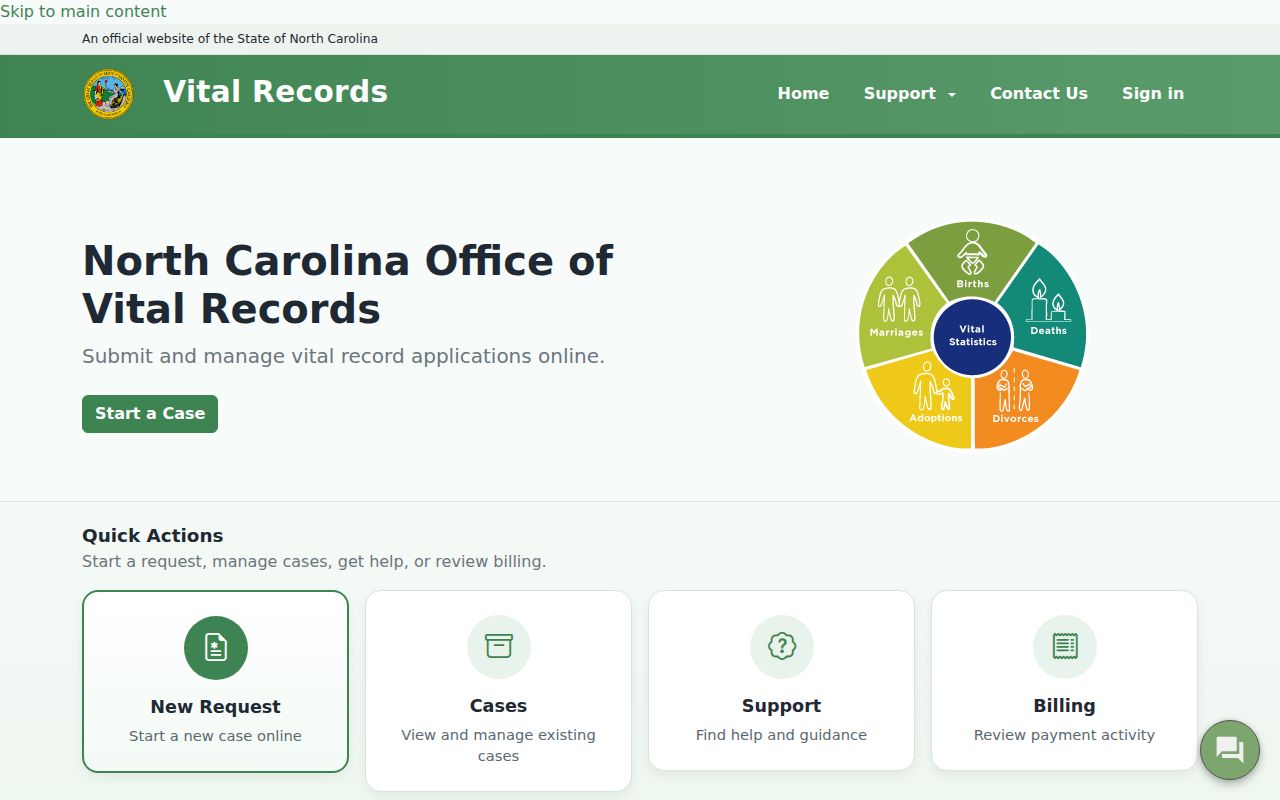
For family-history work, permitted indexes, State Archives finding aids, historical directories, and newspapers are safer starting points than trying to obtain a restricted certificate.
Sanford Resident Lookup License Evidence
A professional or entity record can answer a limited status question, not establish a private household or daily location. The North Carolina Secretary of State business search accepts a search type, words, organizational name, and last, first, or middle person name. A result is a published filing trail. The NCBOLD gateway points to state occupational programs, and each board has its own search fields and update schedule.
The North Carolina State Bar directory offers name, city or state, district, Bar ID, status or type, and specialist fields. It can show membership or status and final disciplinary links, subject to its result limit. That is a professional-status snapshot, not a personal-address confirmation.
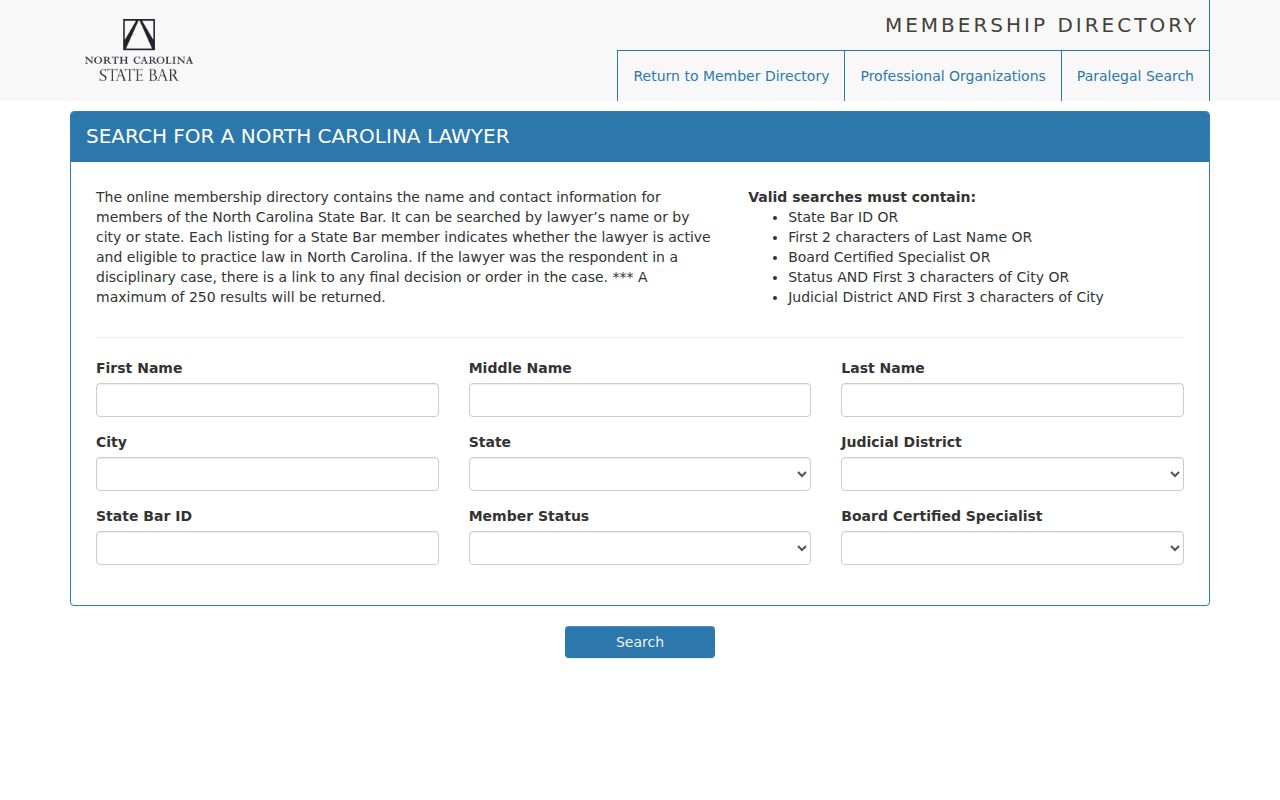
The State Bar’s location and status controls illustrate why source scope should stay with the result.
The North Carolina Board of Nursing verification accepts a license or listing number or first and last name with city. It covers listed license types and published status or disciplinary links, while pending investigations are not available. Verify a board result at the board, then keep its date and jurisdiction with the note.
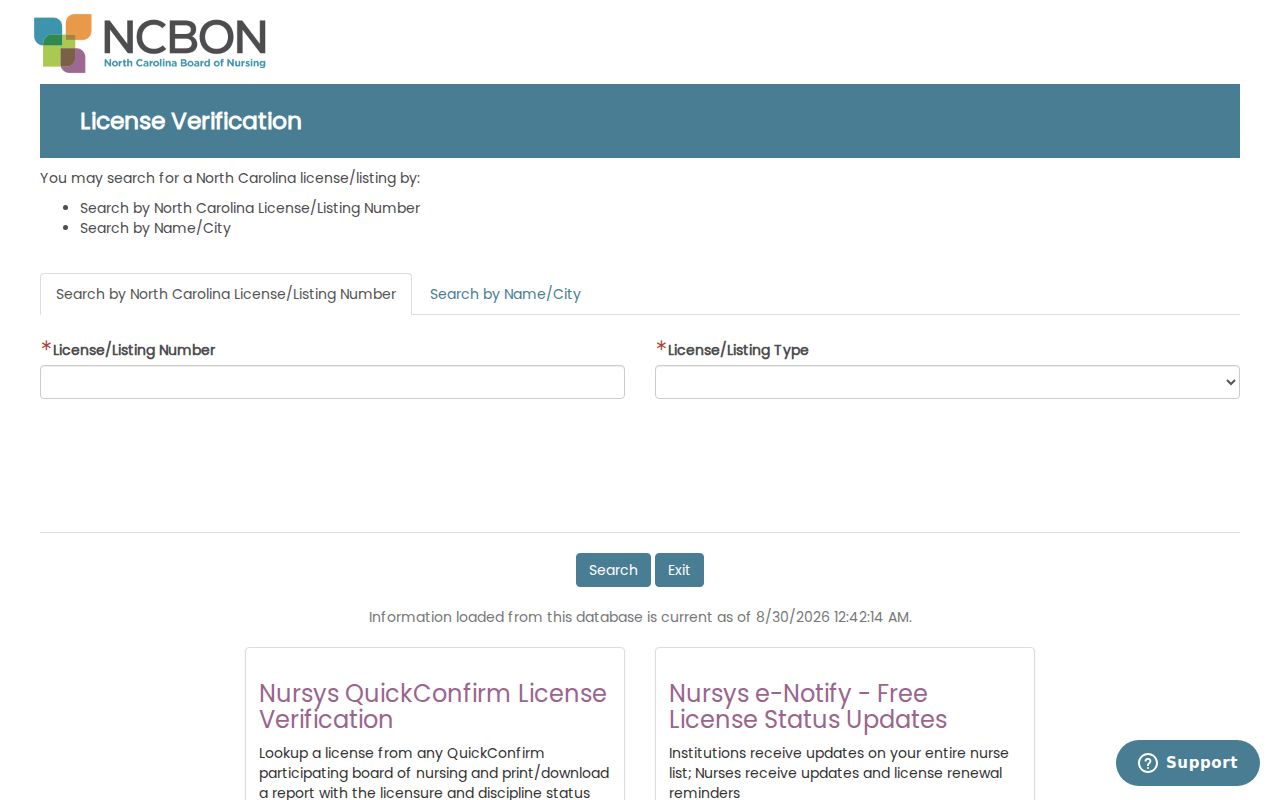
A city field on a license can be a mailing or practice-related field, so it should not be restated as a current home address.
Sanford Family History Connections
Family and reunion questions benefit from a different kind of evidence. Sanford’s historical directories, yearbooks, scrapbooks, and newspaper holdings can connect a surname to a particular year, street, class, or local event without pretending that the record is current. DigitalNC and the Lee County Library are useful for this dated research, while a state vital-record request must still meet the appropriate relationship or legal-purpose rules. Preserve the year, publication, and spelling shown in the source.
For a former classmate, relative, or estate question, use a historical source to identify the correct time and place, then ask the relevant custodian for the limited record needed. A directory entry may be a safer starting point than trying to infer a present address from an old name.
Verify Sanford Resident Records
When a Sanford resident lookup needs a careful answer, anchor the name to a place and date before searching extra sources. The process is strongest when each record is asked one question: the parcel card identifies tax context, the voter record identifies registration context, the docket identifies a case, and a certificate or recorded instrument has its own custodian and legal meaning.
- Normalize the spelling, suffix, former surname, county, and one non-sensitive identifier.
- Find the parcel or address in the assessor and GIS records, and label the result as an owner field, situs, or mailing field.
- Compare one independent source, such as a voter record or public permit event, with its record date and jurisdiction.
- Use eCourts, a license board, or a historical directory only for the specific question it answers, then stop when the evidence is sufficient.
- Docket
- A court’s dated list of case events, hearings, orders, and status information.
- Index and image
- An index lists searchable fields; an image is the underlying filed or recorded document when public and available.
- Certified copy
- A copy issued by the custodian with official certification for the purpose the custodian allows.
For a past household question, the year-specific Hill’s volumes and the Sanford Directory Book can add a historical street association. Do not carry a printed year forward as evidence of a present resident.
Sanford Resident Lookup Stop Rules
North Carolina’s Public Records Act, Chapter 132, opens records subject to confidentiality laws. It does not permit a searcher to obtain every field. Do not seek protected date-of-birth, Social Security, DMV, email, sealed, expunged, juvenile, adoption, or confidential medical information. The correct correction route also belongs with the original keeper: the Assessor for a tax field, the ROD for an instrument, the Clerk for a docket or file, the Board of Elections for voter data, and the relevant state office for a certificate or license.
North Carolina’s Address Confidentiality Program serves qualifying survivors who need a substitute address for mail and certain public uses. A hidden or substitute address is a safety protection, not an invitation to piece together the actual location. ACP information and application-assistant support are available from the North Carolina Department of Justice. Do not reconstruct, publish, or circulate an address that a program or court protects.
Lawful use. Use Sanford resident lookup records for personal, lawful research with the minimum information needed. Never use them to monitor, threaten, harass, or intimidate another person.